Two years ago, the Central Committee of the Communist Party of China and the State Council jointly released the “Overall Plan for Decoupling Trade Associations’ Chambers of Commerce and Administration from Industry Organizations,” advocating that trade associations and chambers of commerce should be separated from ” government -run ones ” and operate independently; and to promote the development of trade associations. What does this shift mean to the industry associations that are seeking survival in transition? On the other hand, all kinds of global alliances have taken root in more and more Chinese, and domestic associations that move toward the international stage to expand their business and exchange industry experience have also been increasing. What are the challenges these trade associations face in terms of policies, direction, funding and talent recruitment? What to do?

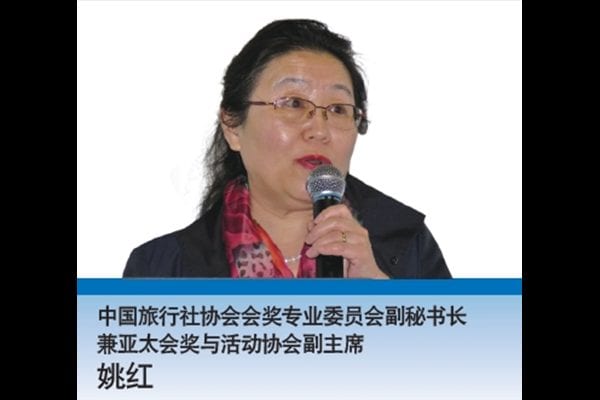
According to Yao Hong , deputy secretary-general of the China Travel Service Association Awards Professional Committee and vice chairman of the Asia Pacific Association for Award and Activities , the Chinese trade associations are broadly divided into four categories:

One, with a special function and has some official industry associations (chambers of commerce). Such as China Association for Science and Technology, China Football Association, China Consumer Association and the Chinese Institute of Certified Public Accountants.
Second, the semi-official nature of the industry associations. There are mainly two types of trade associations, namely, the federations formed in the process of the reform of government agencies in 2000 and the professional associations that are established in accordance with the relevant industries, such as China Coal Industry Association, China Iron and Steel Association, China National Light Industry Council, China Chamber of Commerce, China Food Industry Association, China Hotel Association, China Cuisine Association.
Participation, from the bottom up, initiated by natural or legal persons to establish associations and chambers of commerce organizations . Such associations also include two types: one is privately-run non-governmental organizations that are registered with civil affairs departments in certain regions, such as the Association of Lighters in Wenzhou and the Roasting Association in Shanghai; the other is a non-independent legal entity under the supervision of private associations, Such as Taishan Club, China Entrepreneur Club, Jiangnan Club, Zhenghe Island, Alashan SEE Ecology Association, Relay China Youth Elite Association and others.
The relevant associations that are not registered or registered with the Chinese government departments or the offices or branches established by the relevant overseas associations in China. Such associations are characterized by the fact that they were originally administered under the umbrella of the Chinese government and that the government made use of the branches of these international associations to quickly enter the international market and receive international training. Now, within the limits permitted by the existing laws and regulations in China, we carry out business and various activities and provide services in line with the development of government and industry. Such trade associations bring to China trade associations international information, international management experience, international markets, international training and international consulting such as ICC China Committee, SITE China Chapter, GMGC, Skal International.
China Industry Association what happened? In 2015, the General Office of the CPC Central Committee and the General Office of the State Council released the plan of “decoupling the general plan of chambers of commerce and administrative organs of trade associations”. This is to realize that the trade associations and chambers of commerce should be separated from the administration of the government and implement their own management so as to promote the development of trade associations. This shift to trade associations means that the association is beginning to reshape itself to keep the association going.
By the end of 2014, there were 600,000 social organizations in China, including 307,000 social groups, 289,000 non-governmental private-owned enterprises and 4,044 foundations. Industry associations Chamber of Commerce to 10% to 15% annual rate of rapid growth. By the end of 2016, nearly 70,000 trade associations and chambers of commerce in China had been decoupled from their supervisors and the affiliated administrative agencies to realize the functions of institutions, posts
Can, assets, personnel, party building, foreign affairs, etc. all separated. After decoupling, some trade associations and chambers of commerce are facing challenges. If you can not find the trade association Chamber of Commerce itself, what can be done, can not find their own development goals, but also can not meet the needs of the market, is bound to face severe challenges.
In fact, when it comes to decoupling the association from the custody, the government does not completely ignore the association after it decouples from the trade associations. Instead, it regulates it through the purchase of services. Identify the value of trade associations Chamber of Commerce, a priority task. Industry Association Chamber of Commerce’s greatest value is to serve members, for members to solve difficult topics, hot issues, trends, crises.
After the decoupling, the trade association chambers of commerce should strengthen themselves and build a platform to seek development and shift the focus of service to enterprises, industries and markets and establish a structure compatible with the market mechanism.
On the whole, in recent years, we have to break away from the “government-run” trade associations and suddenly operate independently. We not only learn to listen to the views of our members, but also know how to organize activities and how to hold meetings. Moreover, we must set out the goals and brands of the associations. Unlike the PCO, who do not know how to operate, they need to learn from scratch. Formerly, the role of a second government must now be abandoned and the finance and operations started to be managed separately.
In any case, there is still a lot to learn in China’s trade associations, and the current level has not come yet.